
Carlingford is a village of about fifteen hundred people with a castle, a fortified merchant’s house, a medieval town house called the Mint, the surviving gate of its town walls and the ruins of a friary. That is not a normal ratio. The reason is geography: whoever held this shore held the entrance to the lough, and for four hundred years that was worth building for.
The name is Norse, and so is the first chapter
Vikings were working this coast from the ninth century, and the lough — sheltered, deep and pointing straight inland — was exactly the kind of water they used. The name is theirs: Old Norse Kerlingfjörðr, usually rendered as the fjord of the hag or old woman, thought to refer to a rock on the shore.
Almost nothing Norse survives above ground. What survives is the choice they made about where the harbour should be, and everything after it was built on that.
King John’s Castle, and why it has two names
The castle on the rock above the harbour was begun around 1190 by the Anglo-Norman lord Hugh de Lacy and extended through the thirteenth century. It controlled the entrance to the lough, which was the whole point of it.
It is called King John’s Castle because John — Richard the Lionheart’s younger brother — is said to have stayed there in 1210 during his Irish campaign. You will also see it called Carlingford Castle; it is the same building. Public access to the interior is seasonal — the Carlingford Lough Heritage Trust runs guided tours from March to October, so check locally before you count on getting inside. The exterior and the view over the lough are free and are most of what people come for.
Taaffe’s Castle: what a merchant built
On Newry Street, a sixteenth-century fortified house belonging to the Taaffe family, merchants and later Earls of Carlingford. It tells you more about the town than the castle does: a trader who needed gun loops and a vaulted ground floor as well as a warehouse was a trader doing serious business in a dangerous place.
It is a pub now, which is the best possible outcome for a building of that age — it is used, warm and open most evenings. There is no museum inside, so go for the pint and look at the stonework while you are there.
The Mint and the Tholsel
The Mint is a fortified town house of the fifteenth or sixteenth century, and its carved limestone windows are the best surviving decorative stonework in the village. The town was granted the right to strike coin in 1467, which is where the name comes from.
The Tholsel is the last surviving gate of Carlingford’s town walls. It was the toll gate — which is what the word means — and later served as the town gaol. You walk under it without noticing; it is worth stopping.
At the edge of the village stand the ruins of a Dominican friary founded in 1305, the other half of the medieval town most visitors miss.
The port, and then the railway
Carlingford traded wine, salt, hides and fish across the Irish Sea for centuries, and the medieval street pattern you walk today is the shape of that trade. The port declined; in the nineteenth century the railway age moved the action a few miles down the coast to Greenore, where a railway company built a deep-water port, a station and a hotel from nothing in the 1870s. That is why Greenore looks Victorian and English and Carlingford looks medieval and Irish, twenty minutes apart.
And the leprechauns, which are a real legal curiosity
Local legend holds that the last leprechauns in Ireland live in the Cooley Mountains above the village. In 2009, following a campaign by a local man, 236 leprechauns and their Cooley habitat were, the story goes, brought under the protection of the EU Habitats Directive — a designation that is either the most charming piece of conservation law in Europe or a very good piece of tourism, depending on how you hold your head.
Either way the village takes it seriously enough to run a Leprechaun Hunt every March, and the Leprechaun and Fairy Cavern above the village is built around the story. It is a better hook than most heritage towns manage.
Seeing it in an afternoon
All of the above except Greenore and the friary is inside a fifteen-minute walk. Start at the Holy Trinity Heritage Centre in the restored medieval church to get the order of events straight, then do the castle, the Tholsel, the Mint and Taaffe’s. The walking tour sets out the route, and the top ten attractions covers what else is worth the time.
Staying where the history is
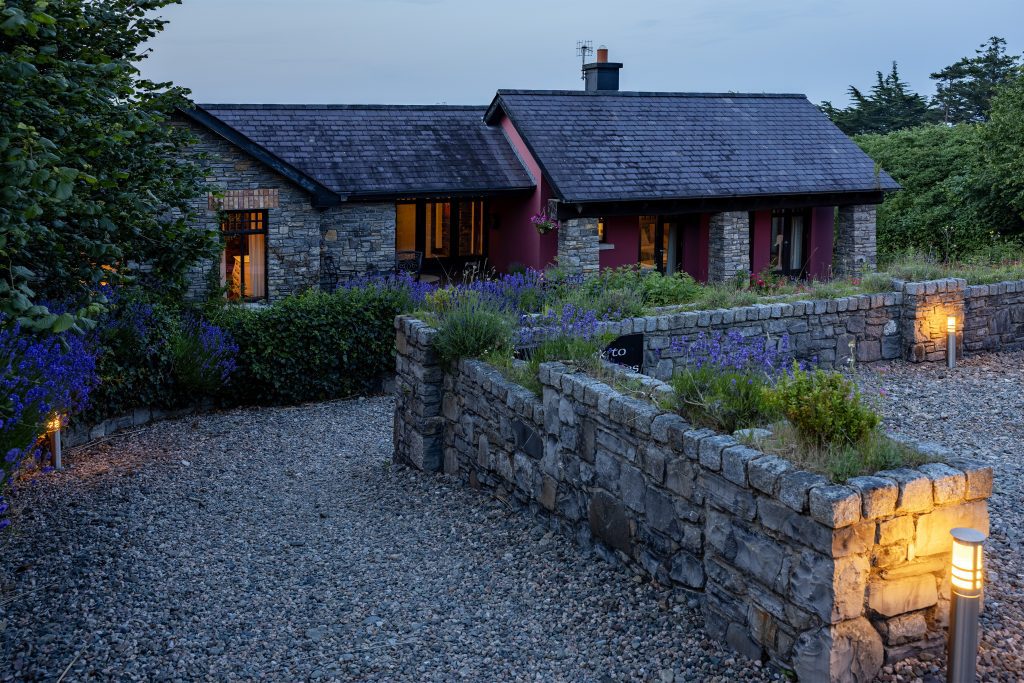
Carlingford Heights is a six-bedroom lodge at Mountain Park, half a mile above the medieval village — ten to fifteen minutes downhill on foot, and a steadier climb back. It is let as a whole house and sleeps twenty, so the castle, the Mint and the friary are all on foot from the door for the entire group. The gallery shows the house and the booking page has the rates and terms.