The Carlingford Lough Ferry is not sailing in 2026. The operator has confirmed the service will not run at any point this year, and no restart date has been announced. Tickets already bought for 2026 are being held so they can be used when the ferry returns. If you were planning to cross the lough by boat during your stay, you will need to drive round instead — and it is worth knowing that before you build a day around it.
Is the Carlingford ferry running?
No. The crossing is suspended for the whole of 2026. The reason given publicly is commercial: the route has struggled to sustain year-round sailings without additional support. There is no announced date for it coming back, although the operator has said existing tickets will be honoured when it does, which suggests the suspension is not meant to be permanent.
Service status belongs to the operator and can change at short notice, so check carlingfordferry.com before you travel rather than taking this page as the last word.
What the ferry normally does
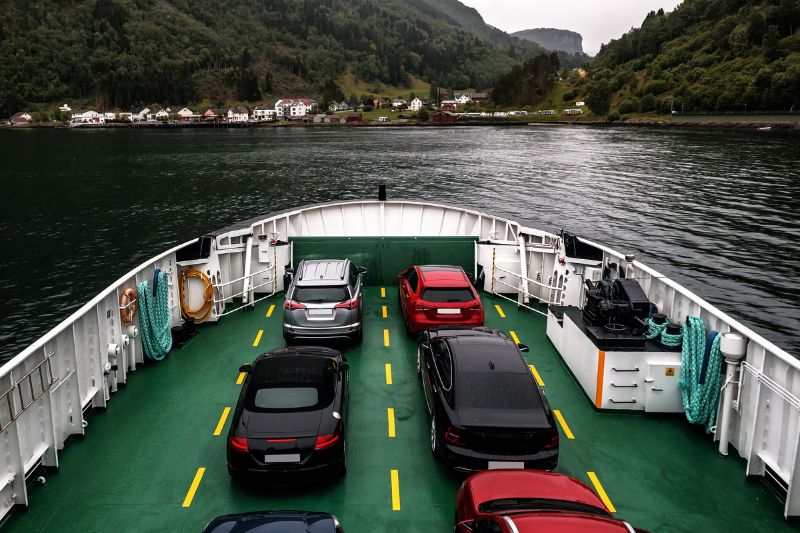
When it runs, the Carlingford Lough Ferry crosses the mouth of the lough between Greenore in County Louth and Greencastle in County Down — not, as it is often described, from Carlingford village itself. The crossing takes about fifteen to twenty minutes and carries cars, motorbikes, bicycles and foot passengers, which is what makes it useful: it replaces a drive of roughly an hour round the head of the lough.
Greenore is a short drive from Carlingford along the Louth shore, so a group staying here would normally use the ferry as the quick way onto the Mourne side for a morning.
Getting to the County Down shore without the ferry
The road route runs up the Louth shore and round the head of the lough through Newry, then back down the far side to Rostrevor, Kilkeel and Greencastle. It is a straightforward drive and the road along the northern shore is one of the better ones in the area, but allow the best part of an hour each way rather than twenty minutes.
If the point of the trip is the Mourne Mountains rather than the crossing itself, the drive loses you very little. If the point was the boat, it is better to know now.
What is on this side of the lough anyway
Most of what people come to Carlingford for is on the Louth shore and needs no ferry at all. Slieve Foy is the highest of the Cooley Mountains and a three-to-four-hour walk up and back; the Táin Way is a forty-kilometre waymarked circuit usually walked over two days or a section at a time; and the Carlingford Lough Greenway runs from the village along an old railway line towards Omeath, which is the easy option with children or bikes. Our guide to the trails and the outdoor operators has the detail, and fishing has its own.
In the village itself there is King John’s Castle, the medieval lanes, the harbour and the marina, and ten places to eat and drink inside a few streets. The walking tour covers the old town, the history of Carlingford explains why a village this size has a castle and a mint, and the pubs and restaurants guide lists thirteen places with addresses and phone numbers.
Other day trips that do not depend on a boat
Newry and Dundalk are both twenty minutes to half an hour away for shopping and supplies. Belfast and Dublin are each a comfortable day out. The Cooley Peninsula loop is a good afternoon on its own, and day trips from Carlingford sets out which are worth the drive.
Staying on the Louth side
Carlingford Heights is a six-bedroom lodge at Mountain Park, half a mile above Carlingford village, let as a whole house and sleeping twenty. It is a short drive from Greenore and the slipway, and ten to fifteen minutes downhill on foot into the village. The gallery shows it room by room and the booking page has the rates and terms — or send us your dates and we will come straight back on whether the house is free.